No. 72C, Mettu Street, Opposite to Mettu Street Bus Stand, Kanchipuram – 631501

×
×

Start Your Conversation
Reach out to Viruksham Home Interior & Decor anytime — let’s design your dream space together in Kanchipuram.
Visit Us:
Call Us:
+91 96297 21208
Email Us:
support@virukshaminteriors.in

×
×
Start Your Conversation
Reach out to Viruksham Home Interior & Decor anytime — let’s design your dream space together in Kanchipuram.
Visit Us:
No. 72C, Mettu Street, Opposite to Mettu Street Bus Stand, Kanchipuram – 631501
Call Us:
+91 96297 21208
Email Us:
support@virukshaminteriors.in
No. 72C, Mettu Street,
Opposite to Mettu Street Bus Stand, Kanchipuram – 631501
Opposite to Mettu Street Bus Stand, Kanchipuram – 631501
How Hospital Interior Designers in Chennai Play a Vital Role
- Home
- Interior Design
- How Hospital Interior Designers in Chennai Play a Vital Role
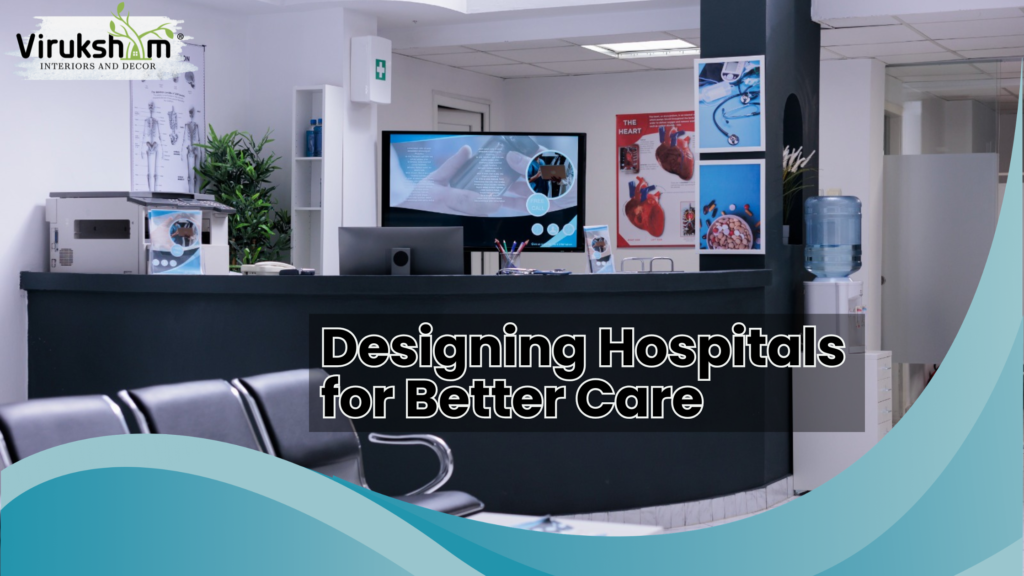
How Hospital Interior Designers in Chennai Play a Vital Role in Patient Comfort and Recovery
When we discuss healthcare, we typically talk about doctors, treatments, and medical technology. Another important factor that is often overlooked is hospital interior design. The environment patients encounter when in a hospital can impact their comfort, emotional well being, and overall perception of care.
Modern hospitals aren’t merely designed for operational efficiency. Increasingly, healthcare institutions are designing environments that promote healing, reduce stress, and improve patient experience. Every interior design decision from layout and lighting to furniture selection and patient room design can influence how patients feel during their healthcare journey.
As healthcare facilities continue to evolve, hospital interior designers in Chennai are helping institutions create spaces that balance medical functionality with patient-centered design.
How Layout Planning Reduces Patient Stress
Hospitals can be intimidating, especially if you’ve never been to one before. Patients often come in feeling anxious and a bad layout can only increase that anxiety. Long corridors, confusing navigation and overcrowded circulation areas can make the experience more frustrating than it needs to be.
Thoughtful space planning can help ease the patient journey. Movement between areas is more efficient, finding departments is easier and visitors have more confidence navigating the facility. Good layout planning will not only enhance functionality but will also provide a sense of order that will help patients feel more at ease.
Why Natural Light Matters in Healing Environments
Natural light has become one of the most valued elements in healthcare design. Hospitals that maximize daylight often create spaces that feel more welcoming and less institutional.
Patients spending long hours indoors benefit from environments that feel connected to the outside world. Natural light can transform waiting areas, patient rooms, and common spaces by creating a brighter and more positive atmosphere. It also helps healthcare facilities feel more open and comfortable. Modern hospital interiors increasingly incorporate larger windows, brighter circulation spaces, and layouts that allow daylight to reach more areas within the building.
The Impact of Colour Psychology in Healthcare Spaces
Colors influence emotions more than many people realize. In healthcare environments, color choices can affect how patients perceive a space and how comfortable they feel within it. Modern hospitals often move away from overly clinical appearances and use carefully selected color palettes that create a calm and reassuring atmosphere. Soft neutral tones, muted colors, and nature-inspired shades are commonly used to make spaces feel more welcoming.
How Furniture Selection Influences Patient Comfort
Furniture plays a much larger role in healthcare design than many people assume. Patients, visitors, and healthcare professionals often spend extended periods sitting, waiting, consulting, or recovering.
Comfortable seating, ergonomic furniture, and patient-friendly designs contribute to a better overall experience. Furniture should support functionality while also helping people feel physically comfortable throughout their stay. In patient rooms, furniture choices can affect convenience and accessibility. In waiting areas, they influence how visitors experience their time within the facility.
Why Waiting Area Design Shapes Patient Experience
Waiting is a part of almost every healthcare visit. While hospitals cannot always eliminate waiting times, they can improve how patients experience those moments.
Poorly designed waiting spaces often feel crowded, noisy, and stressful. In contrast, thoughtfully designed waiting areas create a more comfortable environment where patients and families can relax while waiting for consultations or updates. Modern healthcare facilities increasingly view waiting areas as an important extension of patient care rather than simply transitional spaces.
Designing Patient Rooms for Better Recovery Outcomes
Patient rooms are where individuals spend most of their time during treatment and recovery. As a result, these spaces have a direct impact on comfort and well-being.
Modern hospital room design focuses on privacy, accessibility, comfort, and functionality. Patients need spaces that allow them to rest comfortably while also accommodating visitors and healthcare professionals. The goal is to create an environment that supports recovery without feeling overly clinical. Thoughtful room design helps patients feel cared for throughout their stay.
How Human-Centered Interiors Support Modern Healthcare
The most significant trend in healthcare design is the move toward human-centered environments. Hospitals are increasingly designing spaces around the needs of patients, families, and healthcare professionals rather than focusing solely on infrastructure.
Human-centered design considers how people interact with the environment and how those interactions influence comfort, confidence, and well-being. Every design element from layouts and materials to lighting and furnishings—works together to create a more supportive healthcare experience. As healthcare expectations continue to evolve, hospitals are recognizing that patient comfort and quality care go hand in hand.
Conclusion
Hospital interior design goes beyond aesthetics. It influences how patients navigate spaces, experience treatment, and recover during their healthcare journey. Thoughtful design decisions from layout planning and lighting to furniture and patient room design can create environments that support both comfort and care.
At Viruksham, we are dedicated to providing quality living spaces that fulfill your dreams and aspirations through innovative design and superior craftsmanship
© 2026 Viruksham Home Interior & Decor. All Rights Reserved.
×
×