No. 72C, Mettu Street, Opposite to Mettu Street Bus Stand, Kanchipuram – 631501

×
×

Start Your Conversation
Reach out to Viruksham Home Interior & Decor anytime — let’s design your dream space together in Kanchipuram.
Visit Us:
Call Us:
+91 96297 21208
Email Us:
support@virukshaminteriors.in

×
×
Start Your Conversation
Reach out to Viruksham Home Interior & Decor anytime — let’s design your dream space together in Kanchipuram.
Visit Us:
No. 72C, Mettu Street, Opposite to Mettu Street Bus Stand, Kanchipuram – 631501
Call Us:
+91 96297 21208
Email Us:
support@virukshaminteriors.in
No. 72C, Mettu Street,
Opposite to Mettu Street Bus Stand, Kanchipuram – 631501
Opposite to Mettu Street Bus Stand, Kanchipuram – 631501
Pooja Room Interior Designer in Chennai
- Home
- Interior Design
- Pooja Room Interior Designer in Chennai
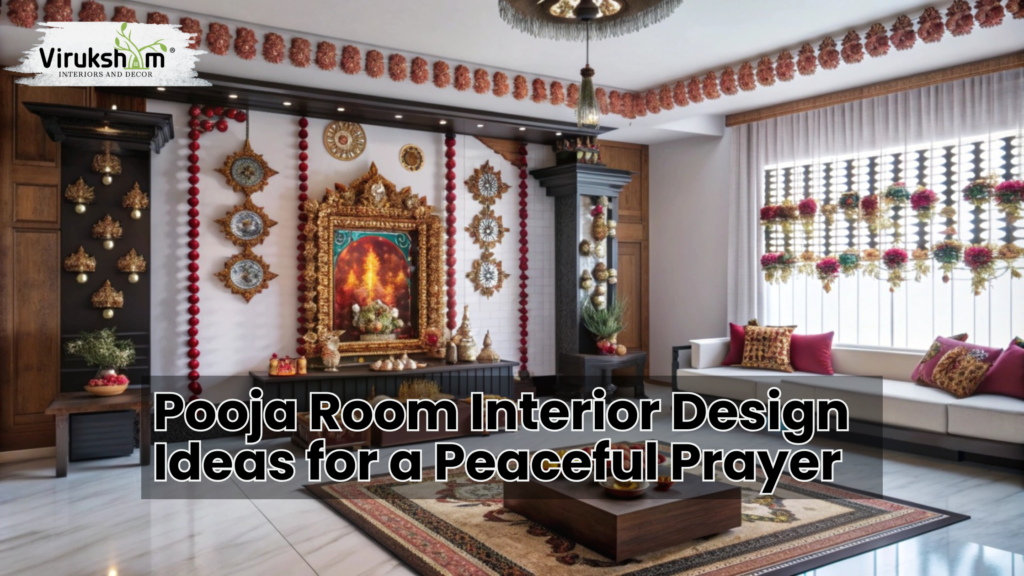
Pooja Room Interior Designer in Chennai: Complete Guide to Designing a Beautiful Prayer Space
A pooja room is one of the most personal spaces in an Indian home. It is where families begin their day with prayer, observe important rituals, and spend quiet moments away from the pace of everyday life. Unlike other rooms, its design is not only about appearance. The space needs to feel peaceful, purposeful, and comfortable for regular use while fitting naturally into the home’s overall interiors.
For homeowners searching for a pooja room interior designer in Chennai, the challenge is often finding the right balance between traditional character and modern functionality. A beautifully carved wooden mandir may suit one home, while a minimalist pooja unit with glass shutters may be more appropriate for another. The right design depends on the available space, family requirements, architectural style, and personal preferences.
Modern Chennai homes also come in many different forms, from compact apartments and 2BHK or 3BHK residences to independent houses and spacious villas. This means a pooja room cannot follow one standard design. A thoughtful approach adapts the design to the home while preserving the significance of the space.
Start With the Space You Actually Have
A separate pooja room is ideal when the floor plan allows it, but it is not essential for creating a meaningful prayer space. A well-designed pooja unit can work beautifully within a living room, dining area, hallway, or another suitable part of the home.
The first step is to understand the available dimensions and how people move around the space. In a compact apartment, a dedicated room may take away valuable usable area, whereas a wall-mounted mandir with shutters or a carefully designed niche can create a defined prayer area without making the home feel smaller.
For larger homes, the possibilities are much wider. A dedicated room can include a mandir, storage for pooja essentials, seating for prayer, decorative wall treatments, and carefully planned lighting.
The important point is that the design should work with the architecture of the home rather than forcing a particular style into an unsuitable space.
Traditional Pooja Room Designs With a Contemporary Touch
Traditional design remains popular because it brings a familiar sense of warmth and cultural identity into the home. Carved wood, traditional mandapam-inspired structures, brass accents, jaali patterns, bells, and ornamental detailing can create a strong traditional character.
However, traditional does not necessarily mean heavily decorated. Modern homeowners often prefer a cleaner interpretation of traditional design. A wooden backdrop with subtle carving, a simple brass finish, warm lighting, and limited decorative elements can create a sophisticated pooja space without making it visually heavy.
This combination works particularly well when the rest of the home follows a contemporary design language. The pooja room retains its traditional identity while still feeling connected to the modern interiors around it.
Modern Pooja Units for Compact Chennai Homes
Space is an important consideration in many Chennai residences. Apartments, especially, may not have a separate room available for prayer. This has led to more creative approaches to pooja room interiors.
A compact wall-mounted pooja unit can turn an unused wall into a dedicated prayer space. Glass shutters can provide separation while allowing the unit to remain visually light. Fluted glass, wooden screens, CNC-cut panels, or decorative jaali partitions can also define the pooja area without completely closing it off.
Another practical approach is an integrated pooja niche within a larger storage or TV unit. When designed carefully, the niche can have its own lighting and material finish, giving it a clear identity without disrupting the surrounding interiors.
The objective is not to make the pooja area large. It is to make the available space meaningful and functional.
Choosing Materials for the Right Look and Feel
Material selection has a significant influence on the character of a pooja room. Wood remains a popular choice for traditional designs because of its warmth and natural texture. Veneer finishes can offer a similar visual character while allowing greater flexibility in contemporary interiors.
For modern designs, laminates, painted finishes, glass, stone-inspired surfaces, and subtle metallic accents can be combined to create a refined appearance.
The material should also be practical for the environment in which it is being used. Chennai’s warm and humid climate makes durability and maintenance important considerations, particularly for enclosed cabinetry and wooden elements.
Rather than selecting a material simply because it looks attractive in a reference image, designers consider the finish, maintenance requirements, surrounding materials, and expected usage before recommending a combination.
Give the Deity Area the Right Visual Focus
The main deity area naturally becomes the focal point of the pooja room. The surrounding design should support this focus rather than compete with it.
A beautifully proportioned backdrop can immediately establish the character of the space. Designers may use wooden panels, marble-look surfaces, decorative arches, textured finishes, or subtle patterns behind the idols.
Proportion is particularly important. A backdrop that is too elaborate can overwhelm a compact unit, while one that is too plain may fail to create the intended sense of importance. Lighting can further emphasize the deity area. Warm, concealed illumination around the backdrop or inside the niche can create depth and a calm atmosphere without making the space overly bright.
Storage Should Be Planned From the Beginning
Pooja rooms often need more storage than homeowners initially expect. Lamps, incense, prayer books, flowers, containers, festive decorations, and other ritual essentials need designated places.
Leaving these items on open shelves can quickly make the space look cluttered. Instead, drawers and concealed cabinets can be integrated below or beside the main mandir.
In a compact unit, even a few well-planned drawers can make a significant difference. Larger dedicated rooms may allow for additional cabinets or a separate storage section.
Good storage should remain visually quiet. The purpose is to keep essentials accessible without taking attention away from the prayer area.
Lighting Can Change the Entire Atmosphere
Lighting deserves special attention because it affects the emotional quality of the space.
Natural light can make a pooja room feel open and fresh during the day, while warm artificial lighting creates a softer atmosphere in the evening. Concealed LED strips, backlighting, small spotlights, or carefully positioned ceiling fixtures can be used according to the design.
The lighting should illuminate the deity area clearly without creating harsh glare. It should also work alongside the natural light available in the room.
For homes where the pooja area is integrated into a living or dining space, dedicated lighting is especially useful because it visually separates the prayer area from the surrounding interiors.
Designing Around Personal Preferences and Vastu Considerations
For many Indian families, Vastu is an important consideration when planning a pooja space. However, Vastu preferences can vary between families, so they should be discussed during the initial design stage rather than treated as an afterthought.
Homeowners may have preferences regarding the room’s location, orientation, placement of idols, doors, and other elements. These requirements should be considered alongside practical factors such as ventilation, available space, electrical points, and the overall architecture. A good design approach respects the family’s beliefs while ensuring the final space remains comfortable and practical.
Creating Separation Without Making the Space Feel Closed
A pooja room should feel distinct from the rest of the home, but a completely enclosed structure is not always necessary. Architectural screens are an effective solution for modern homes. Fluted glass, wooden slats, jaali panels, decorative partitions, and framed openings can establish a clear boundary while allowing light and visual continuity.
This approach works particularly well in open-plan apartments where a fully enclosed room may make the living area feel smaller. The result is a dedicated spiritual space that feels connected to the home rather than isolated from it.
Common Pooja Room Design Mistakes to Avoid
One common mistake is trying to include too many decorative elements in a small space. A pooja room does not need excessive ornamentation to feel special. Too many colors, patterns, and accessories can make the area visually distracting.
Another mistake is ignoring storage until the end of the project. Without dedicated storage, everyday pooja essentials quickly create clutter. Poor lighting planning can also affect the final appearance. Extremely bright or cool lighting may not create the calm atmosphere homeowners expect, while insufficient lighting can make the deity area difficult to see. Finally, copying a reference image without considering the dimensions and architecture of your own home can result in a design that looks impressive online but does not work well in reality.
Why Professional Pooja Room Design Makes a Difference
A pooja room may be smaller than other areas of the home, but it requires the same level of planning and attention to detail. Professional designers consider proportions, materials, storage, lighting, electrical requirements, ventilation, surrounding interiors, and the family’s personal preferences before finalizing the design. They can also adapt traditional design elements to modern spaces without losing their character.
For homeowners searching for a pooja room interior designer in Chennai, the right designer should understand that this is not simply another decorative unit. It is a space with emotional and cultural importance, and its design should reflect that significance while remaining practical for everyday use.
Conclusion
The best pooja room interiors are not defined by size or expensive decoration. They are defined by thoughtful planning and the ability to create a peaceful space that fits naturally into the home.
Whether you prefer a traditional wooden mandir, a contemporary wall-mounted unit, or a dedicated pooja room with customized detailing, the design should reflect your family’s preferences while providing practical storage, appropriate lighting, and a sense of calm.
At Viruksham Interiors, we approach pooja room design with the same attention to detail given to every part of the home. From compact apartment prayer units to dedicated spaces in larger residences, our focus is on creating personalized interiors that respect tradition while fitting beautifully into modern homes.
At Viruksham, we are dedicated to providing quality living spaces that fulfill your dreams and aspirations through innovative design and superior craftsmanship
© 2026 Viruksham Home Interior & Decor. All Rights Reserved.
×
×