No. 72C, Mettu Street, Opposite to Mettu Street Bus Stand, Kanchipuram – 631501

×
×

Start Your Conversation
Reach out to Viruksham Home Interior & Decor anytime — let’s design your dream space together in Kanchipuram.
Visit Us:
Call Us:
+91 96297 21208
Email Us:
support@virukshaminteriors.in

×
×
Start Your Conversation
Reach out to Viruksham Home Interior & Decor anytime — let’s design your dream space together in Kanchipuram.
Visit Us:
No. 72C, Mettu Street, Opposite to Mettu Street Bus Stand, Kanchipuram – 631501
Call Us:
+91 96297 21208
Email Us:
support@virukshaminteriors.in
No. 72C, Mettu Street,
Opposite to Mettu Street Bus Stand, Kanchipuram – 631501
Opposite to Mettu Street Bus Stand, Kanchipuram – 631501
jewellery shop interior designers in chennai
- Home
- Interior Design
- jewellery shop interior designers in chennai
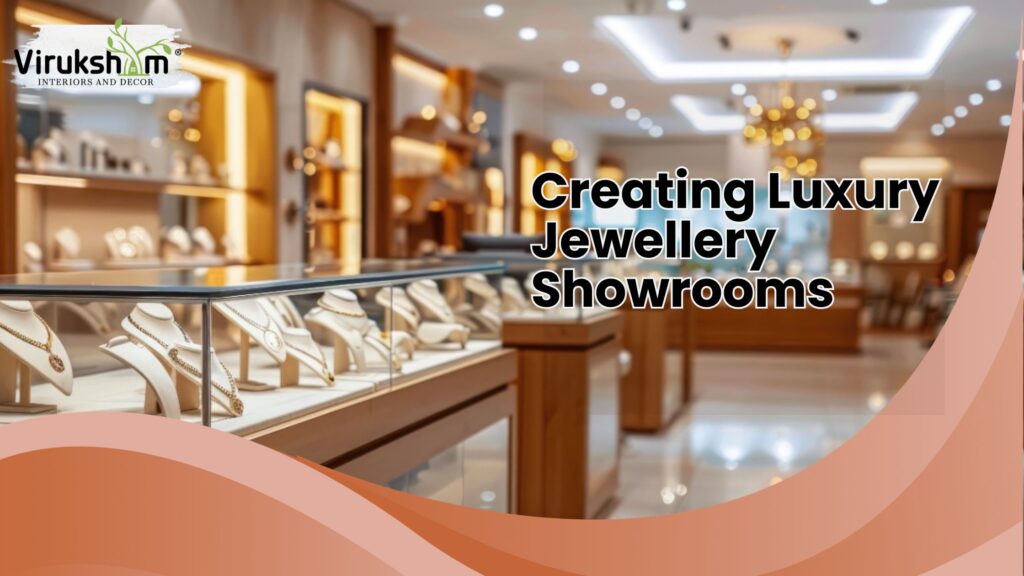
How Jewellery Shop Interior Designers in Chennai Craft Showrooms as Precious as the Jewels Inside
A customer decides how much they trust your store before they ever look at a necklace. The moment they step through the door, the flooring underfoot, the temperature of the light, the way the counters are arranged — all of it is quietly telling them whether this is a place worth spending several lakhs in. That is exactly why experienced jewellery shop interior designers in Chennai treat a showroom not as a construction project but as a sales instrument.
Jewellery is unlike almost any other retail category. People buy it for weddings, milestones, investments, and heirlooms. The purchase is emotional, considered, and expensive — which means the environment carries far more weight than it would in a supermarket or an apparel outlet. Below is what actually separates a showroom that converts from one that merely looks polished.
First Impressions Are Decided at the Entrance
The threshold of a showroom does most of its persuasion in the first ten seconds. A cluttered façade, harsh signage, or a cramped doorway signals “ordinary” before a single salesperson says a word.
A well-planned entrance does the opposite. Restrained branding, dignified materials, and a smooth transition from street noise to a calmer interior tell the visitor they’ve arrived somewhere exclusive. In a city as competitive as Chennai — where legacy jewellers and new-generation brands sit on the same street — that opening moment is often the only differentiation a walk-in customer notices.
Lighting: The Real Salesperson on the Floor
Ask any veteran in this trade and they’ll agree: nothing kills a diamond faster than bad lighting. Stones that dazzle in one showroom look lifeless in another, and the merchandise is identical. The difference is beam angle, colour temperature, and layering.
A properly lit showroom works on three levels. Focused display illumination brings out fire and brilliance inside the counters without throwing glare into the customer’s eyes. Ambient light keeps the overall space warm and flattering. Accent fixtures then pull attention toward hero collections — bridal sets, solitaires, antique temple pieces — so the eye travels exactly where the merchandiser wants it to.
Get this layer right and every product looks more valuable. Get it wrong and no amount of craftsmanship on the jewellery itself can compensate.
Layouts That Guide Rather Than Overwhelm
You walk into a badly designed shop and you know it straight away. Customers are wandering around the door, not knowing where to go, peering at rows of identical counters crammed edge to edge with stock.
Instead, good spatial planning creates a visual hierarchy. Feature walls ground the space, circulation patterns organically flow from everyday collections to premium zones, showcases are curated not crammed. Scarcity on the showroom floor is perceived as exclusivity, something high-end retailers everywhere know well. When a visitor is presented with twelve well-selected pieces rather than two hundred fighting for their attention, each piece requires a longer engagement and a higher perceived price point.
Comfort Quietly Drives Bigger Bills
No one buys a wedding set standing up. Bridal purchases especially involve the whole family, looking at designs, arguing over budgets, trying items on and off for an hour or more. If the place makes that ritual too tiring, the family leaves and decides somewhere else.
So there is now hospitality thinking in showroom planning: good seating at the counters, lots of space to walk between displays, refreshment corners, consultation nooks for talking without an audience. A relaxed customer stays longer and the dwell time is directly proportional to the size of the transaction. The numbers rarely do. Retailers tend to underestimate this.
Materials Should Match What’s in the Vitrine
There’s a jarring mismatch when fine gold sits inside laminate counters under a false ceiling that’s visibly ageing. Finishes speak, and customers hear them.
Natural stone, textured wall panels, brushed metal trims, and quality veneers build an atmosphere that supports premium pricing rather than undercutting it. The discipline lies in restraint — surfaces should feel rich without competing with the ornaments for attention. The better firms handling jewellery showroom interiors also plan for longevity, choosing palettes and textures that will still look current a decade from now instead of chasing a trend that dates within two seasons.
Privacy Has Become a Premium Expectation
More and more high-value buyers demand discretion. A person buying a ₹40 lakh diamond set is unlikely to want to haggle at an open counter with strangers looking over their shoulder.
That need is satisfied in dedicated consultation rooms and private viewing lounges, especially for bespoke commissions, solitaire selection, and bridal trousseau planning, where decisions are made over several sittings. The design challenge is a balancing act: the store must feel open and welcoming to walk-ins but also offer enclosed spaces where serious conversations can take place unseen. Showrooms that can consistently solve this equation close their biggest tickets in those private rooms.
Security That Customers Feel but Never See
Every jewellery outlet needs serious protection — surveillance coverage, reinforced display cases, controlled access, and monitored strongrooms. The mistake is letting the customer feel it.
Visible grilles, bulky cameras, and guard-heavy atmospheres create tension that works directly against a luxury experience. Skilled planning integrates every security requirement into the architecture itself, so protection is comprehensive yet invisible. The shopper should feel safe without once being reminded why.
The Showroom Is the Brand
Ultimately, people forget individual displays but remember how a store made them feel. The scent when they entered, the courtesy of the seating, the ease of finding what they came for — these impressions decide whether they return for the next occasion and whom they recommend to relatives planning a wedding.
That is why forward-looking jewellers now treat interiors as brand strategy. A coherent, well-executed environment builds the trust that repeat business depends on, and in this trade, repeat business is everything.
Conclusion
Designing a jewellery showroom means engineering confidence: lighting that flatters the merchandise, layouts that guide without pressure, materials that echo the value of what’s being sold, and privacy and protection woven in so seamlessly they go unnoticed. Each element either reinforces a customer’s willingness to spend or erodes it.
At Viruksham, we are dedicated to providing quality living spaces that fulfill your dreams and aspirations through innovative design and superior craftsmanship
© 2026 Viruksham Home Interior & Decor. All Rights Reserved.
×
×