No. 72C, Mettu Street, Opposite to Mettu Street Bus Stand, Kanchipuram – 631501

×


×
Dining Room Interior Designer in Chennai: Ideas for Modern Homes
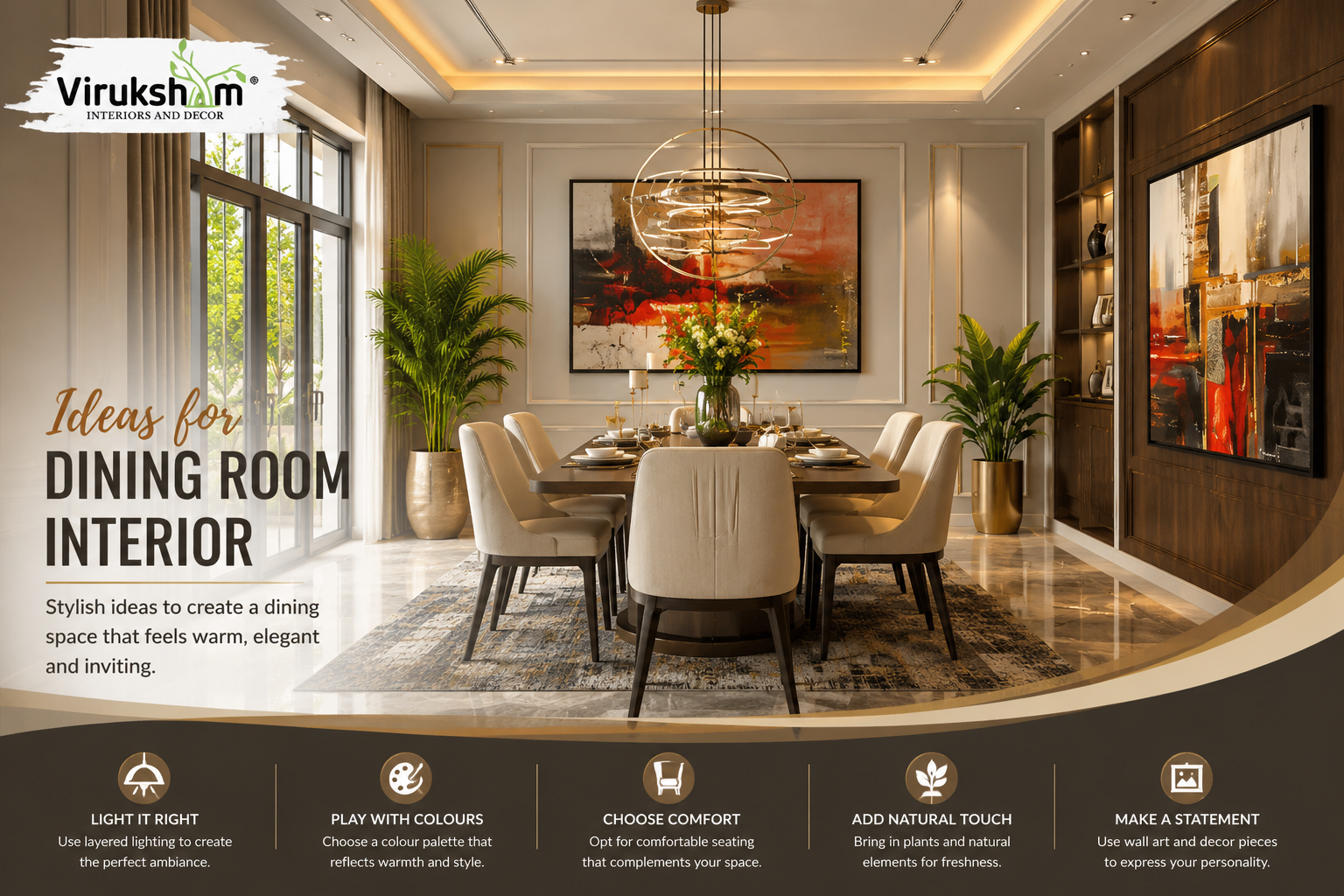
The dining room is not just for dining. It’s where families gather after a busy day, where conversations continue over dinner, and guests are welcomed for special occasions. This means that a well-designed dining space can make a home more comfortable, organized and inviting.
Good dining room interior design is about finding the right balance between aesthetics and everyday functionality. The dining table, seating, lighting, wall finishes, storage, and colors should work together while complementing the living room and kitchen.
For homeowners planning a new home or renovating an existing space, working with an experienced dining room interior designer in Chennai can help create a dining area that is practical, visually appealing, and suited to the way the family lives.
Start With the Right Dining Room Layout
Space planning is the foundation of a successful dining room. Before choosing furniture or decorative finishes, it is important to understand how the dining area connects with the rest of the home.
In some homes, the dining room is a separate space. In others, particularly modern apartments, it forms part of an open-plan layout connecting the living room and kitchen. Both approaches can work well when the proportions and movement within the space are carefully considered.
There should be enough room around the dining table for people to sit comfortably, pull out their chairs and move around without making the area feel congested. At the same time, leaving too much unused space can make a smaller dining area feel disconnected.
The layout should therefore be planned around the dimensions of the room, the number of people using it and the way the dining space connects with the rest of the home.
Choose a Dining Table That Suits Your Space
The dining table naturally becomes the center of the room, making its size and shape important to the overall design.
A rectangular dining table is a practical choice for larger rooms and families who regularly need additional seating. A round table can work particularly well in a compact dining area because it allows easier movement around the table and creates a more intimate setting.
For smaller households, a square table may be sufficient. An extendable table can also be considered when the family regularly hosts guests but does not want a large table occupying the room every day.
The best dining table is not necessarily the biggest one. It should be proportionate to the room and leave sufficient space for comfortable movement.
Select Dining Furniture for Comfort and Style
Dining chairs are just as important as the
table. They need to be comfortable for everyday meals while complementing the overall interior design.
Wooden chairs can add warmth and a timeless character, while upholstered seating can create a softer and more comfortable atmosphere. Bench seating is another option for compact homes, particularly when available floor space needs to be used efficiently.
When selecting dining room furniture, consider how the finishes relate to the rest of the home. Wood tones, upholstery and other details can be coordinated with the living room furniture, flooring, kitchen cabinetry or other interior elements.
This creates a stronger visual connection between the dining area and the rest of the home.
Use Lighting to Create the Right Ambience
Lighting has both a functional and decorative role in dining room interiors. It provides the illumination needed for everyday meals while also helping establish the mood and visual focus of the space.
One of the most effective dining room lighting ideas is to position a pendant light directly above the dining table. A chandelier can work well in a larger or more formal dining room, while recessed lights, cove lighting and accent lighting can provide additional layers of illumination.
The size of the fixture should be proportionate to the dining table and room. A fixture that is too large can overwhelm a compact space, while one that is too small may not create enough visual impact.
Well-planned lighting can also highlight a feature wall, crockery unit or artwork, adding depth to the overall interior.
Create Character With Dining Room Wall Design
The wall behind the dining table is often an ideal place to introduce personality into the room.
Good dining room wall design does not necessarily require elaborate decoration. A carefully selected material or feature can create a strong focal point while keeping the rest of the room understated.
Depending on the home’s style, options can include wood finishes, fluted panels, textured surfaces, decorative laminates, wallpaper, mirrors or artwork. A combination of warm wood tones and subtle textures can work particularly well in contemporary homes.
In smaller dining areas, a strategically placed mirror can also create a greater sense of visual depth.
The key is to make the feature work with the dining table, lighting and surrounding interiors rather than treating the wall as a completely separate design element.
Add a Functional Crockery Unit
A dining area often needs dedicated storage for crockery, serving dishes, glassware and other dining essentials. A well-planned crockery unit design can provide this storage while also becoming part of the interior.
A full-height unit can make good use of vertical space in a larger dining room, while a compact built-in cabinet or sideboard may be more appropriate for a smaller home. Glass-fronted sections can be used to display selected pieces, while closed storage keeps everyday clutter out of sight.
For compact Chennai homes, integrated storage can be especially useful. However, the unit should be proportionate to the room so that it does not restrict movement or make the dining area feel crowded.
Select Materials That Balance Beauty and Practicality
Materials influence the appearance, texture, and character of a dining room.
Wood finishes can bring warmth to the space, while stone-look surfaces can create a contemporary feel. Laminates, glass, textured panels, and other decorative finishes can be introduced to create contrast and visual depth.
A sophisticated interior does not need a large number of different materials. A carefully selected combination of complementary finishes can create a more balanced result.
Everyday practicality should also be considered. Dining spaces are used frequently and require regular cleaning, so materials should be selected with maintenance and long-term usability in mind.
Choose Colours That Connect the Dining Area With the Home
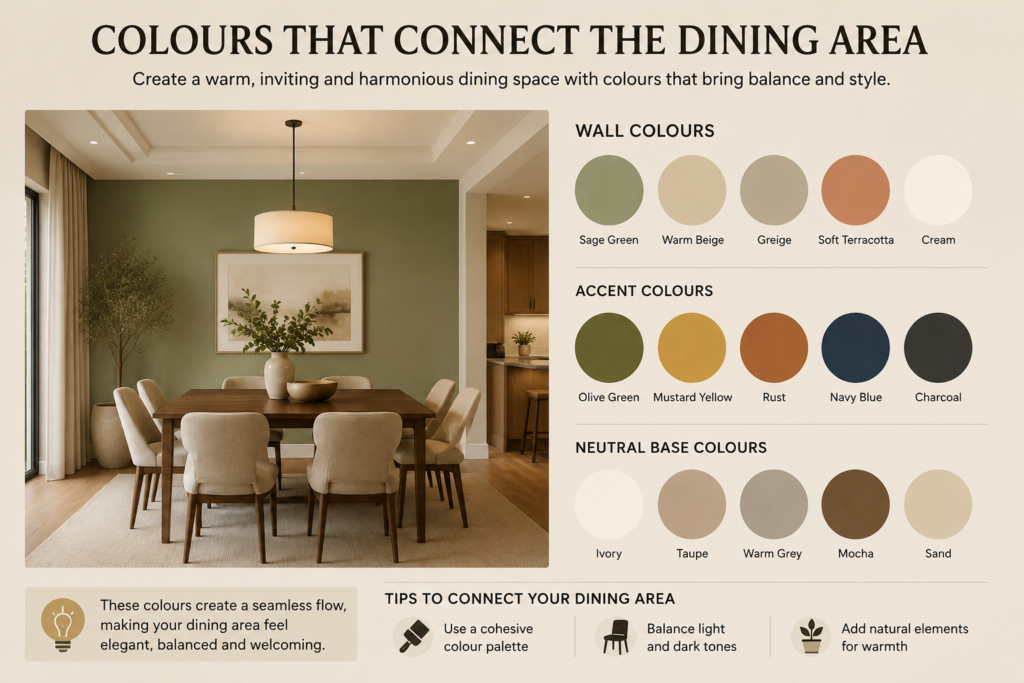
Color plays an important role in creating visual continuity.
Neutral shades can create a timeless backdrop, while warmer tones can make the dining area feel more welcoming. Deeper colours can be introduced through an accent wall, furniture or decorative elements to create contrast without making the space feel heavy.
The dining room colour palette should work with the living room, kitchen, flooring, curtains, and other furniture. When these elements share complementary tones and finishes, the entire home feels more cohesive.
This becomes particularly important in open-plan homes, where the dining area is visible from multiple spaces.
Small Dining Room Interior Design Ideas
A small dining area does not have to compromise on style or comfort. The key is to make every element work efficiently within the available space.
For small dining room interior design, compact round tables, bench seating and extendable furniture can help improve space utilisation. Wall-mounted or built-in storage can reduce the need for additional furniture, while lighter finishes and mirrors can make the area feel more open.
The most important consideration is proportion. A smaller dining room with a few carefully selected elements will generally feel more comfortable than one filled with oversized furniture and excessive decoration.
Modern Dining Room Interior Design for Open-Plan Homes
Many modern homes combine the living room, dining area and kitchen into one connected space. This creates an open and spacious feeling, but it also requires careful planning so that each area has its own identity.
Modern dining room interior design can define the dining zone through a statement pendant light, ceiling treatment, feature wall, rug or furniture arrangement without physically closing the area off.
The dining area should still share selected colours, materials, or design details with the living room and kitchen. This creates a sense of continuity while allowing the dining space to remain visually distinct.
For Chennai apartments, this approach can be particularly effective because one well-planned open space can serve multiple functions without feeling cluttered.
Create a Timeless Dining Room Interior
Interior trends change regularly, but good design principles remain relevant for years.
Rather than designing the dining room entirely around a short-term trend, focus on proportion, comfort, functionality, durable materials and appropriate lighting. Contemporary elements can certainly be introduced, but they should work with the overall character of the home.
A timeless dining room is one that continues to look refined while adapting to changes in furniture, accessories and family requirements.
How Professional Interior Design Can Improve Your Dining Space
Designing a dining room involves more than selecting a table and choosing a wall colour. The layout, furniture, lighting, storage, materials and architectural details all need to work together.
An experienced designer can assess the available space and develop a design around the family’s requirements. This is especially useful when the dining area forms part of a larger home interior design in Chennai, where the living room, kitchen and dining area need to follow a consistent design language.
Professional planning can also help avoid common problems such as oversized furniture, insufficient circulation space, poorly positioned lighting or storage that overwhelms the room.
Dining Room Interior Design in Chennai
Chennai homes come in many different layouts, from compact city apartments to spacious independent houses. As a result, dining room design should be adapted to the property rather than copied from a standard template.
A compact apartment may need a space-saving dining table and integrated storage, while a larger home may allow for a dedicated dining room with a larger table, statement lighting and a customised crockery unit.
The family’s lifestyle is equally important. A home where the dining table is used every day requires a different approach from one where the dining room is primarily used for entertaining guests.
This is where a professional dining room interior designer in Chennai can bring value by combining the practical requirements of the space with the homeowner’s preferred style.
Dining Room Interiors by Viruksham Interiors
At Viruksham Interiors, dining spaces can be planned as part of a complete residential interior, allowing the dining area to connect naturally with the living room, kitchen and other parts of the home.
The focus is on bringing together space planning, furniture, storage, materials, lighting and finishing details to create a cohesive interior rather than designing each element independently.
Whether the requirement is a compact dining area for an apartment or a more elaborate dining space for an independent home, the design should reflect the homeowner’s lifestyle while maintaining the overall character of the residence.
Create a Dining Room Designed Around Your Home
A successful dining room is not defined by the number of decorative elements it contains. It is defined by how naturally everything works together.
The right layout creates comfortable movement. The right furniture supports everyday use. Lighting establishes the atmosphere, while materials, colours, storage and wall treatments give the space its character.
For homeowners planning a new home or renovating an existing dining area, professional interior planning can transform an ordinary dining space into a comfortable and well-integrated part of the home. Viruksham Interiors creates residential interiors that balance aesthetics, functionality and the way each family lives. If you are looking for a dining room interior designer in Chennai, the design should begin with your home, your space and your lifestyle—not with a template.
×